Simple & Modern Crochet Coasters: Free Crochet Pattern
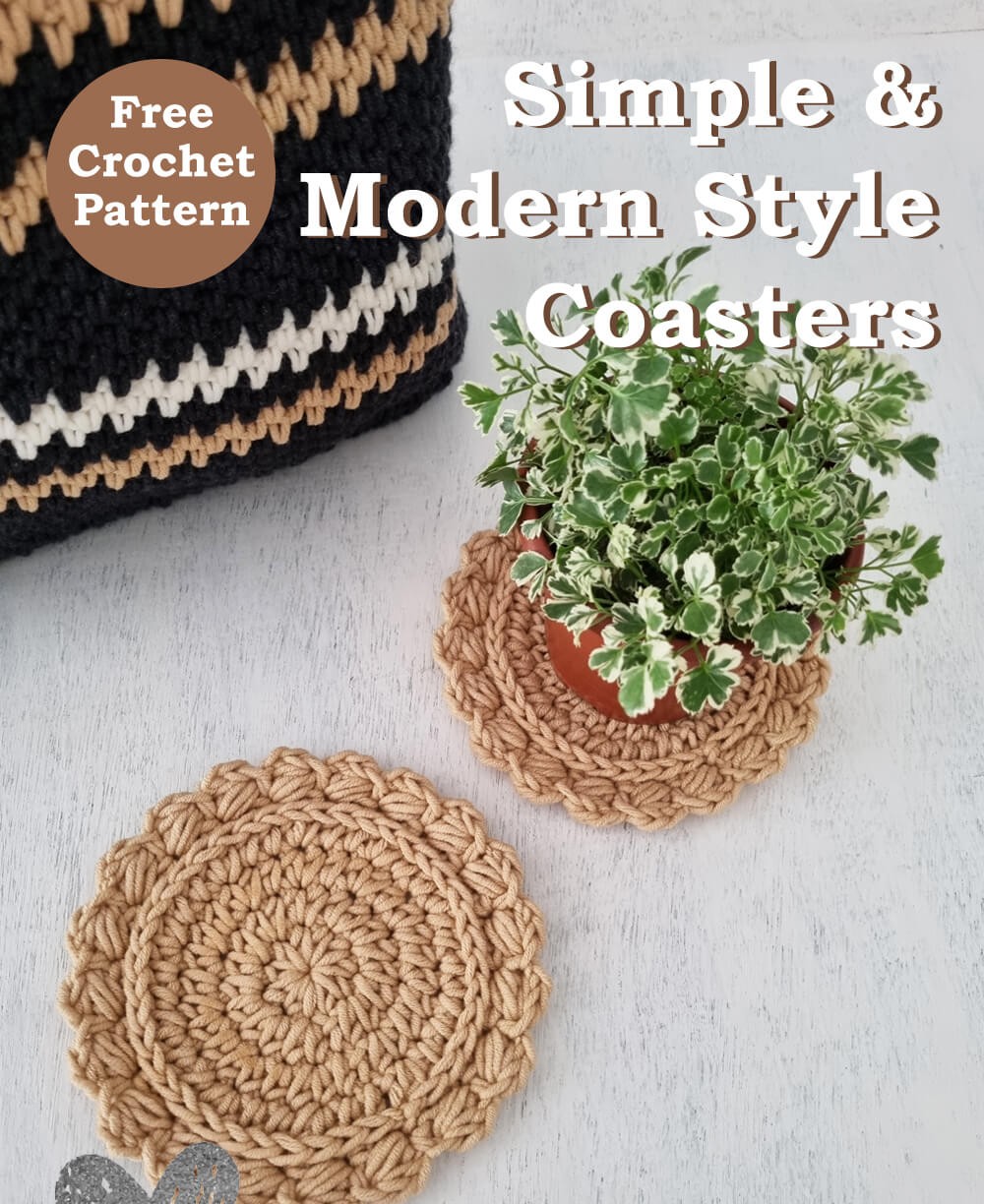
Looking for a small crochet project that is beautiful, useful, and satisfying to make? These Simple & Modern Crochet Coasters are a lovely choice for adding a handmade touch to your coffee table, dining table, kitchen, or home office. With their round shape, subtle texture, and decorative puff-stitch edge, they have a clean modern appearance while still keeping the warm handmade feeling that makes crochet so special.
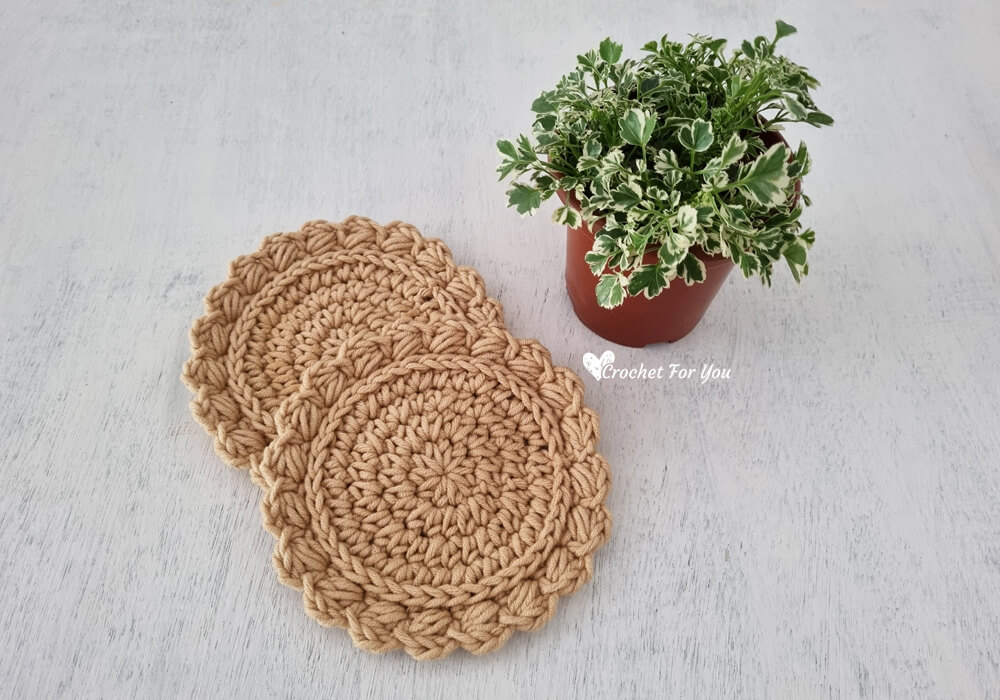
What makes this project especially appealing is its balance between simplicity and texture. The center remains clean and understated, while the outer rounds create a more interesting finish without making the coaster look overly complicated. A neutral yarn color gives the design a modern, natural appearance, but the same construction can also be adapted to many different color palettes.
Why These Crochet Coasters Are Worth Making
Small crochet projects can sometimes be the most enjoyable ones. They do not require a large amount of yarn, they can usually be completed much faster than blankets or garments, and they give you an opportunity to practice individual techniques without committing to a huge project.
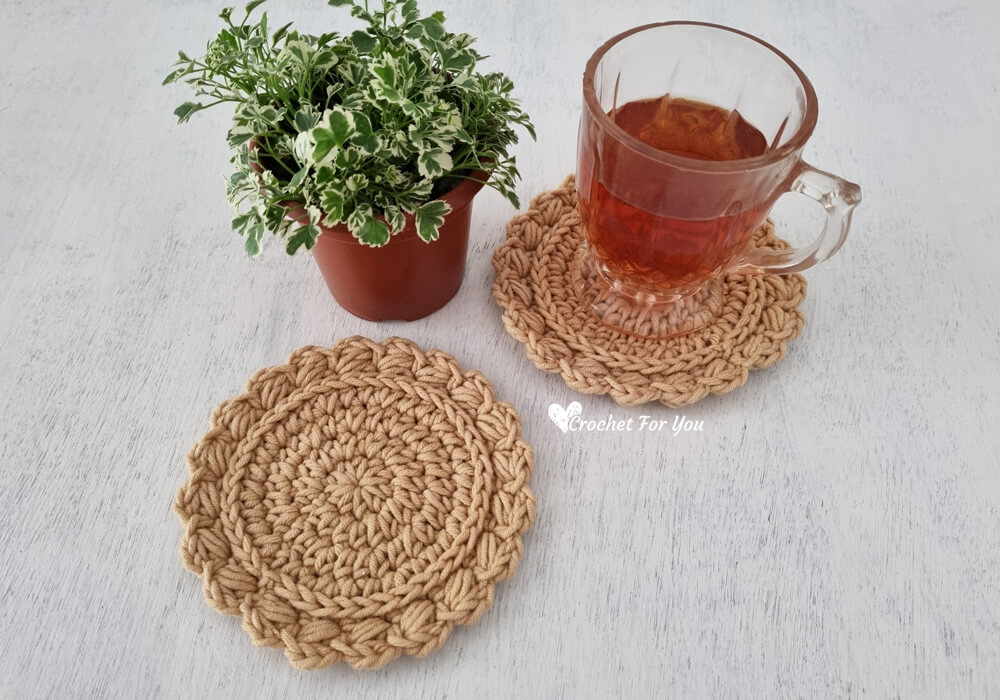
These coasters are particularly useful because they combine decoration with everyday function. Instead of simply making another decorative crochet motif, you end up with something that can actually be used around the home. Place one underneath a coffee mug, a glass of tea, a small plant pot, or another tabletop item to create a cozy handmade atmosphere.
The design also works beautifully with neutral and earthy home décor. The warm beige tone shown in the original project creates a soft boho-inspired appearance, but you can easily change the yarn color to match your own interior.
What Makes the Design Look Modern?
The beauty of this coaster comes from the combination of several relatively simple elements. The center has a neat circular structure, the middle section creates subtle texture, and the outer edge introduces a more decorative finish. Together, these details create a coaster that feels handmade without looking old-fashioned.
The original design combines single crochet, puff stitches, and crochet worked through the third loop. The third-loop technique is particularly useful here because it changes the visual appearance of the stitches and creates a raised horizontal texture around the coaster.
Project Details at a Glance
| Project | Crochet Coaster |
| Style | Simple, modern, textured |
| Shape | Round |
| Finished size | About 5 inches in diameter |
| Yarn | Medium / Worsted / Cotton blend |
| Hook | US H-8 / 5 mm |
| Main techniques | Single crochet, puff stitches, third-loop crochet |
| Best for | Home décor, gifts, stash projects, table accessories |
The project specifications above are based on the original pattern published by Crochet For You. :contentReference[oaicite:1]{index=1}
Materials You Will Need
One of the best things about this project is that the supply list is short. You do not need a large collection of special tools or materials to get started.
1. Medium-Weight Yarn
The original design uses a 4-Medium / Worsted / cotton-blend yarn. The sample uses a warm café-latte type neutral shade, which gives the finished coaster a soft and natural appearance.
For your own version, you can choose almost any color that works well with your home. Cream, beige, taupe, caramel, terracotta, sage green, dusty rose, charcoal, or soft blue can all create very different moods while keeping the same basic design.
2. 5 mm Crochet Hook
The original pattern uses a US H-8 / 5 mm crochet hook. A hook around this size works well with medium-weight yarn and helps create a coaster that has enough structure while still retaining some softness.
3. Tapestry Needle
You will need a tapestry needle for weaving in the yarn ends after completing the coaster. A neat finish is particularly important with small projects because loose ends can become noticeable very quickly.
4. Scissors
A small sharp pair of scissors is all you need for trimming the yarn.
Understanding the Construction
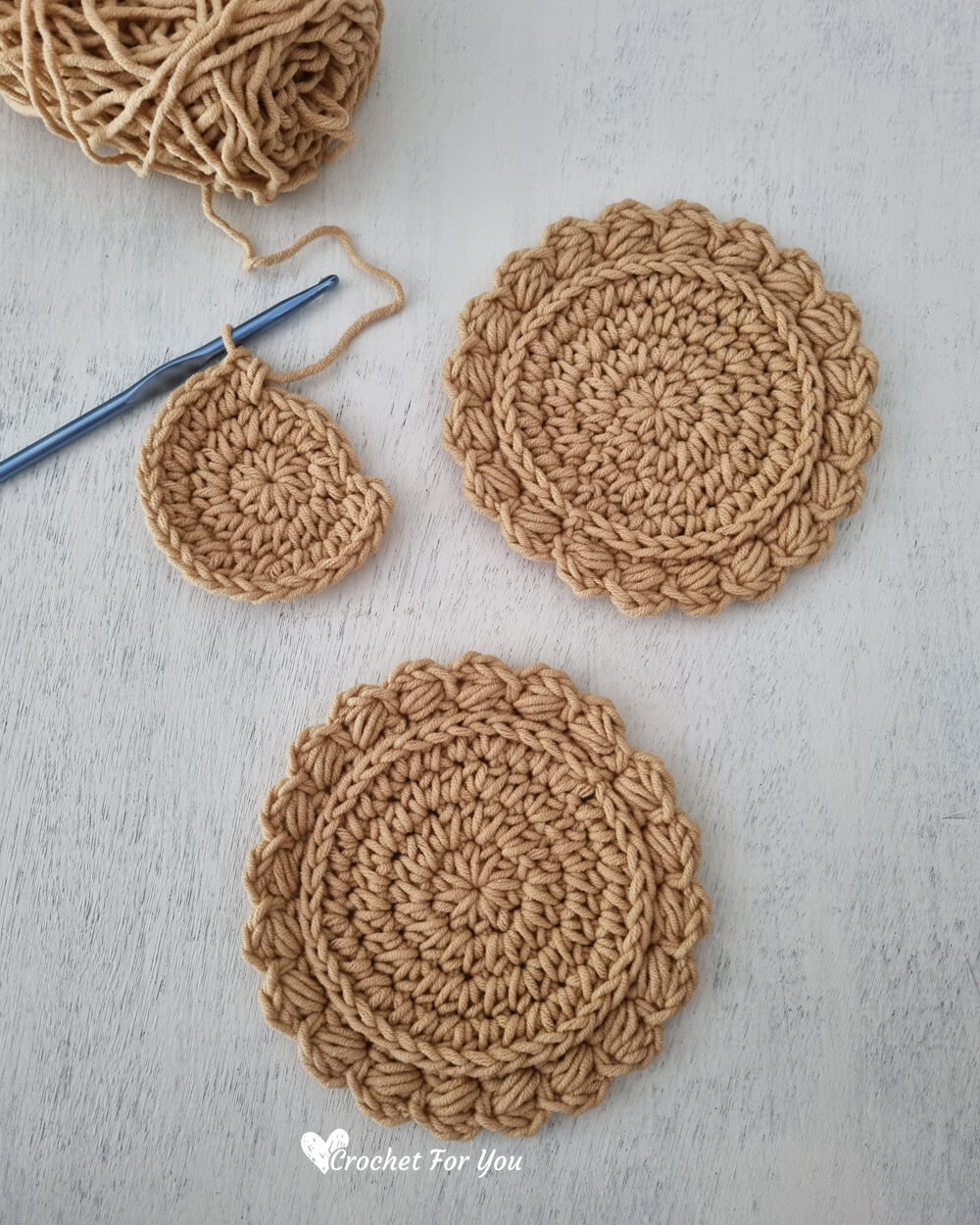
Although the finished coaster looks detailed, the overall construction is quite straightforward. It is worked outward from the center in circular rounds. The first rounds establish the circular base, additional stitches gradually increase the diameter, and the final section introduces the decorative textured edge.
Thinking about the project in these stages makes it much easier to understand:
- Build the center.
- Increase the circle evenly.
- Create the textured middle section.
- Finish with the decorative puff-stitch edge.
- Fasten off and weave in the ends.
This type of construction is also useful for crocheters who want to understand how circular crochet develops. Rather than simply following individual stitches, you can see how each round contributes to the final shape.
The Center of the Coaster
The project begins with an adjustable ring. This creates a compact center that can be closed tightly, helping prevent a large hole from appearing in the middle of the coaster.
The first circular rounds use half double crochet stitches and controlled increases. The increases are important because they allow the work to expand outward while maintaining a flat circular shape.
When crocheting circular projects, it is worth paying attention to your tension. If your stitches become too tight, the coaster may begin to curl. If the increases are too loose or uneven, the outer edge may become wavy.
A relaxed and consistent tension is usually the easiest way to achieve a clean result.
The Textured Third-Loop Section
One of the details that gives this design its distinctive appearance is the use of the third loop. This technique changes where the hook is inserted compared with standard crochet.
Instead of working through the familiar two loops at the top of the stitch, you locate the additional loop positioned behind the stitch. Working into this loop can create a raised horizontal ridge and gives the fabric a more structured appearance.
This is a useful technique to learn because it can be applied to many other crochet projects. Once you understand where the third loop is located, you can experiment with it on hats, baskets, bags, home décor pieces, and other circular designs.
The Puff-Stitch Border
The final round is where the coaster gets much of its decorative character. Puff stitches are arranged around the outside to create a soft, slightly raised edge.
The puff stitches add texture without requiring a complicated lace pattern. They also create small rounded sections around the perimeter, giving the coaster a handmade floral or scalloped impression.
Because puff stitches use several loops and yarn overs, maintaining consistent tension is important. Try not to pull the loops extremely tightly. Keeping them reasonably even will help the border look balanced all the way around.
Choosing the Right Yarn Color
The neutral color used for the sample is one of the reasons the design looks so modern. It allows the texture to become the main visual feature rather than relying on bright color changes.
If you want a minimalist home décor look, consider:
- Warm beige
- Natural cream
- Oatmeal
- Soft taupe
- Light brown
- Muted gray
- Sage green
For something more playful, try mustard yellow, dusty pink, rust, teal, lavender, or deep green. You can also make every coaster in a different color while keeping the same pattern.
Make a Matching Set
One coaster is useful, but a complete set makes the project even more attractive. Try making four, six, or even eight matching coasters for a coordinated table setting.
A matching set can be especially beautiful when all of the coasters use the same yarn color. The repeated circular shapes create a simple visual rhythm when they are arranged together on a table.
Another option is to create a coordinated color palette. For example, you could make:
- Two beige coasters
- Two cream coasters
- Two soft brown coasters
This gives you variety while keeping the overall collection cohesive.
How to Get a Flat, Even Coaster
One of the most common problems with circular crochet projects is an uneven shape. Fortunately, several small habits can help.
Keep Your Tension Consistent
Try to maintain the same tension throughout the entire project. Sudden changes in tension can make one section tighter than another and may cause the coaster to curl or ripple.
Count Your Stitches
Even though the coaster is small, counting your stitches is still useful. Missing an increase can cause the circle to become uneven, while adding an unnecessary stitch can make the outer edge flare.
Check the Shape as You Work
Do not wait until the final round to inspect the shape. Lay the crochet piece flat every few rounds and check whether it is forming an even circle. This makes it much easier to correct a problem early.
Do Not Over-tighten the Puff Stitches
Puff stitches naturally create a thicker section of fabric. If you pull every loop extremely tight, the border can become stiff and difficult to work. Aim for even, relaxed loops.
Blocking the Finished Coaster
Blocking is not always necessary for a small coaster, but it can help if your finished piece is slightly uneven. After finishing, gently shape the coaster into a circle and allow it to dry flat.
The goal is not to stretch the coaster dramatically. Instead, simply encourage the stitches and outer edge to settle into a clean, symmetrical shape.
Ideas for Using These Crochet Coasters
These coasters are obviously perfect for cups and glasses, but their use does not have to stop there. Their size and decorative appearance make them surprisingly versatile around the home.
For Coffee and Tea
Use them underneath your morning coffee, afternoon tea, or evening drink. The handmade texture immediately adds warmth to a simple table setting.
Under Small Plant Pots
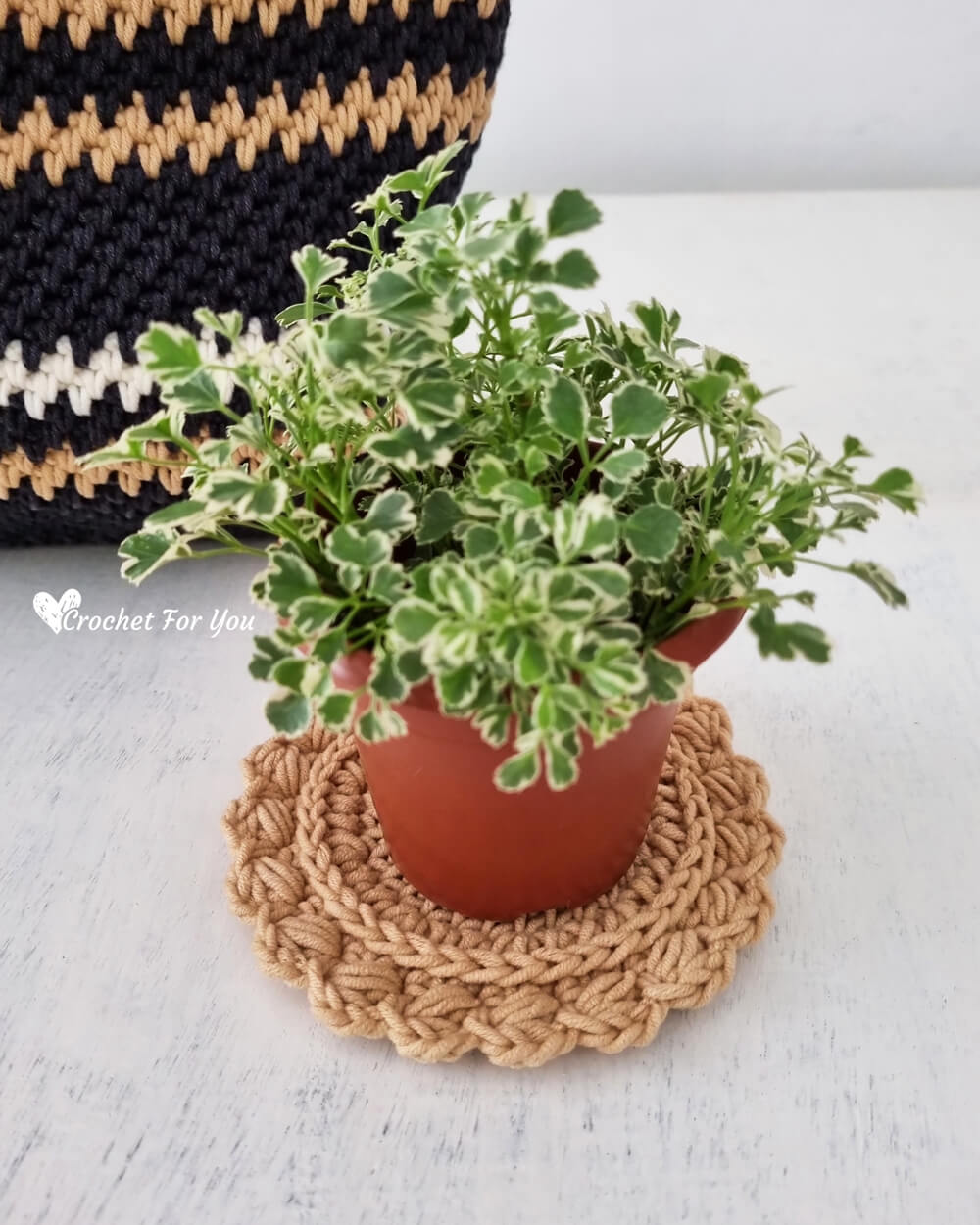
The photographs show another lovely use: placing a small plant pot on top of the crochet piece. This creates a soft decorative layer between the pot and the tabletop.
If you use them this way, remember that moisture can affect handmade yarn items. A waterproof tray or plant saucer underneath the pot can help protect the crochet from excess water.
On a Desk
A crochet coaster can also be used underneath a mug in a home office. The neutral design works especially well with wooden desks, neutral stationery, plants, and minimalist décor.
As a Handmade Gift
A small matching set of handmade coasters makes an easy gift for birthdays, housewarmings, holidays, teachers, coworkers, or anyone who enjoys handmade home accessories.
Simple Ways to Customize the Design
The original neutral version is beautiful on its own, but one of the advantages of crochet is how easily a design can be personalized.
Change the Color
The easiest customization is simply choosing a different yarn color. A single color keeps the design clean, while several colors can make each round more visible.
Create Seasonal Sets
You can create different sets throughout the year.
- Spring: sage, cream, pale pink, and soft yellow
- Summer: coral, turquoise, white, and sunny yellow
- Autumn: rust, mustard, brown, and olive
- Winter: cream, gray, burgundy, and forest green
This is a simple way to refresh your home décor without changing the underlying pattern.
Make Larger Versions
The circular construction can also inspire larger projects. By continuing the concept with additional rounds, a similar style could be adapted into a larger table mat or decorative piece. However, increasing the size changes the construction and stitch counts, so the original pattern should not simply be extended without checking how the increases need to be distributed.
Is This a Beginner Crochet Project?
The original pattern is listed as Intermediate. The overall shape is not particularly complicated, but the project introduces techniques that a complete beginner may need to practice first.
The most important techniques to understand are:
- Working in the round
- Making increases evenly
- Half double crochet
- Single crochet
- Working into the third loop
- Making puff stitches
- Joining rounds neatly
- Weaving in yarn ends
If you already know the basic crochet stitches, this can be a nice project for learning how texture can be created without complicated colorwork.
Why Small Crochet Projects Are Great for Using Leftover Yarn
Crochet coasters are also excellent stash-busting projects. A large project may leave you with small quantities of yarn that are too little for another blanket or garment but still perfectly useful for small accessories.
Because each coaster requires only a relatively small amount of yarn, you can experiment with colors that have been sitting in your stash for a while.
This also makes coasters useful for testing a new yarn. Instead of committing to a large project immediately, you can make a small sample and see how the yarn behaves, how the stitches look, and whether you like the finished texture.
Care Tips for Crochet Coasters
Since coasters are practical household items, choosing a washable and durable yarn is helpful. Cotton and cotton-blend yarns are commonly used for this type of project because they are practical for everyday home accessories.
Always check the care instructions for the specific yarn you choose before washing the finished item. Different fibers and yarn blends can react differently to heat, agitation, and drying.
For handmade coasters, keeping them flat while drying can also help them retain their shape.
A Simple Handmade Touch for Modern Homes
There is something particularly appealing about crochet projects that do not look overly complicated. These coasters demonstrate how a relatively small amount of yarn and a handful of techniques can create something that looks polished and intentional.
The combination of a neutral color, circular shape, subtle texture, and decorative puff-stitch edge makes the design easy to incorporate into many different interiors. It can work with rustic décor, modern spaces, boho-inspired rooms, farmhouse styling, or simple Scandinavian-inspired settings.
And because each coaster is handmade, tiny differences in tension and texture give the finished set its own character. That is one of the things that makes handmade crochet so enjoyable.
Free Pattern and Original Designer
This design is originally published by Crochet For You by designer Erangi Udeshika. The original page includes the complete written pattern and a video tutorial, along with the designer’s material information and stitch explanations. :contentReference[oaicite:2]{index=2}
If you would like to make the exact original version, please use the original pattern rather than copying the complete instructions into another website.
View the Original Free Crochet Pattern
Frequently Asked Questions
How big are the finished crochet coasters?
The original pattern lists the finished size at approximately 5 inches in diameter. Your final size can vary slightly depending on yarn, hook size, and individual crochet tension. :contentReference[oaicite:3]{index=3}
What yarn is used for these coasters?
The original project uses medium-weight worsted cotton-blend yarn, with Ice Yarn Lorena Worsted in a café-latte color shown as the sample yarn. :contentReference[oaicite:4]{index=4}
What crochet hook size is used?
The original pattern uses a US H-8, 5 mm crochet hook. :contentReference[oaicite:5]{index=5}
What stitches are used?
The design uses basic stitches together with puff stitches and a third-loop crochet technique. The third-loop technique is one of the details that gives the finished coaster its distinctive texture. :contentReference[oaicite:6]{index=6}
Can I use a different yarn color?
Absolutely. The neutral color shown in the original design creates a minimalist look, but the project can be personalized with almost any color palette that works with your décor.
Can I make a set of these coasters?
Yes. Making several matching coasters is one of the best ways to use this design. You can create a uniform set using one color or make each coaster slightly different with coordinated colors.
Are these coasters suitable as gifts?
Yes. A small handmade set is practical, inexpensive to make, and easy to package as a housewarming, birthday, holiday, or handmade gift.
Can beginners make this pattern?
The original designer categorizes the pattern as intermediate. A beginner who already understands basic crochet stitches may be able to learn the additional techniques with practice, especially the third-loop technique and puff stitches. :contentReference[oaicite:7]{index=7}
Final Thoughts
Simple crochet projects do not have to be boring. These modern crochet coasters are a great example of how texture, shape, and a carefully designed border can transform a small everyday object into something beautiful.
They are small enough to be approachable, practical enough to use every day, and flexible enough to customize for different rooms, seasons, and occasions. Whether you make one as a quick practice project or create an entire matching set for your home, this is the kind of crochet project that can be both relaxing to make and useful when finished.
If you enjoy neutral home décor, textured crochet, quick projects, or handmade gifts, this coaster design is definitely worth adding to your crochet inspiration list.
Designer credit: This article discusses a crochet design originally published by Crochet For You by Erangi Udeshika. The original pattern and photographs belong to their respective copyright holder. For the complete original instructions, please visit the designer’s website using the link above.